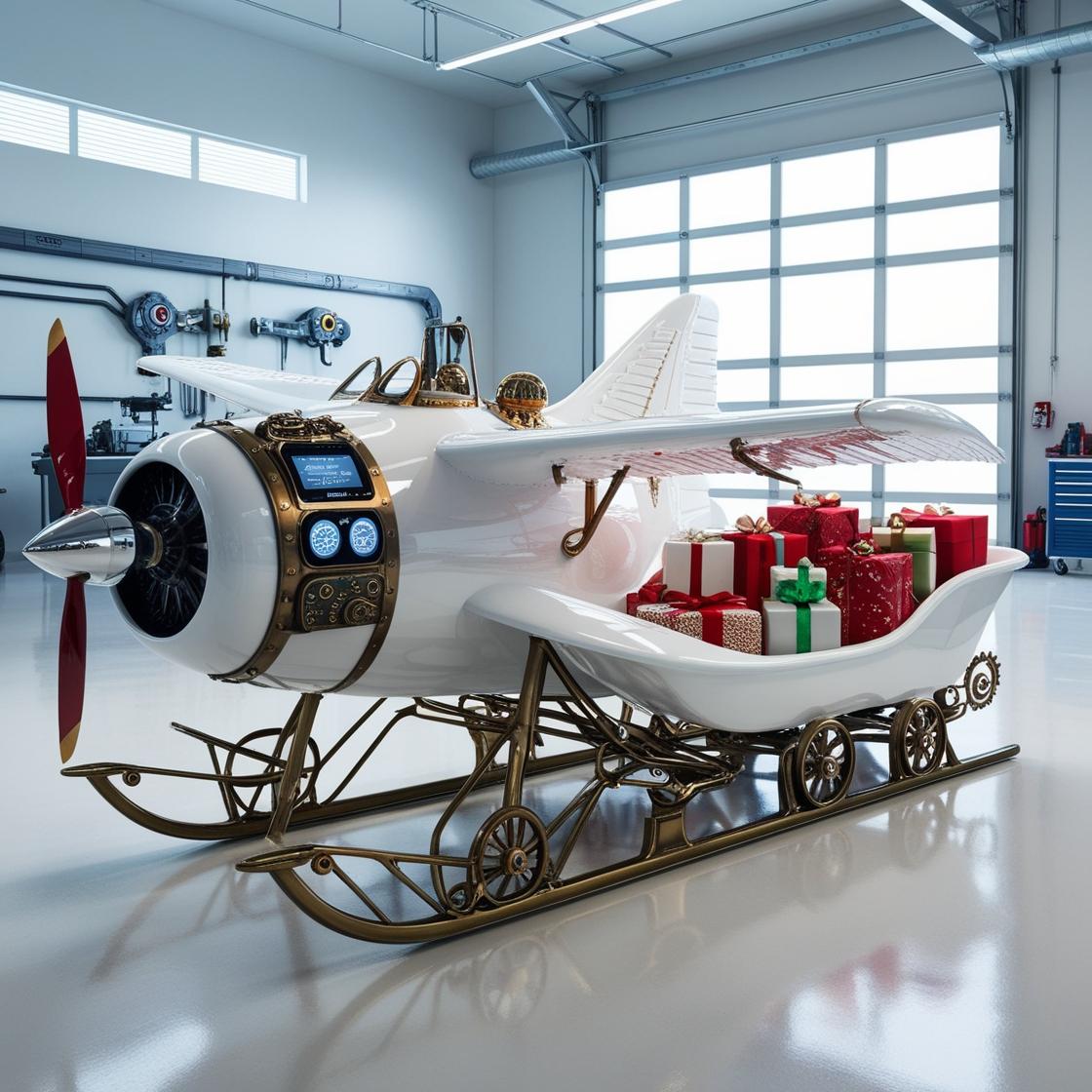
Helmi stood beside Santa’s sleigh, now fitted with sleek, multi-segmented wings bristling with flaps—each one designed to make the sleigh more efficient in flight. The idea was simple: more flaps meant better maneuverability and lift. But during a test run, Helmi noticed a glaring problem. The added flaps made the sleigh twitchy and unstable, reacting unpredictably to even small gusts of wind. The digital flight control system struggled to keep up, its latency causing dangerous delays. “This won’t work,” Helmi muttered, feeling the weight of Christmas looming closer.
Helmi had no time to waste. Pulling out their trusty programmable analog processor, they designed a direct sensor-actuator system for real-time flap control. Tiny analog sensors embedded in the wings fed wind pressure and turbulence data directly into the processor, which adjusted the flaps instantly, with no delay or energy-hungry computations in between. The analog system’s speed was unmatched, reacting faster than even the sharpest elf pilot could blink.
By evening, the sleigh soared through the test flight, gliding smoothly even in turbulent winds. Helmi watched it streak across the snowy sky with a grin. “Stable, efficient, and ready for the big night,” they said, jotting a final note. *Analog saves Christmas again.*
